
What is Montessori?
The Montessori Method was developed by Dr. Maria Montessori, an Italian physician and educator who observed that children learn best in environments that encourage independence, movement, and purposeful work. She found that freedom within clear boundaries helps children develop concentration, responsibility, and a love of learning.
Based on these insights, Montessori education emphasizes hands-on, self-directed learning in carefully prepared environments that support each stage of development. The philosophy nurtures the whole child—socially, emotionally, physically, and intellectually—and is practiced worldwide today.
The Absorbent Mind
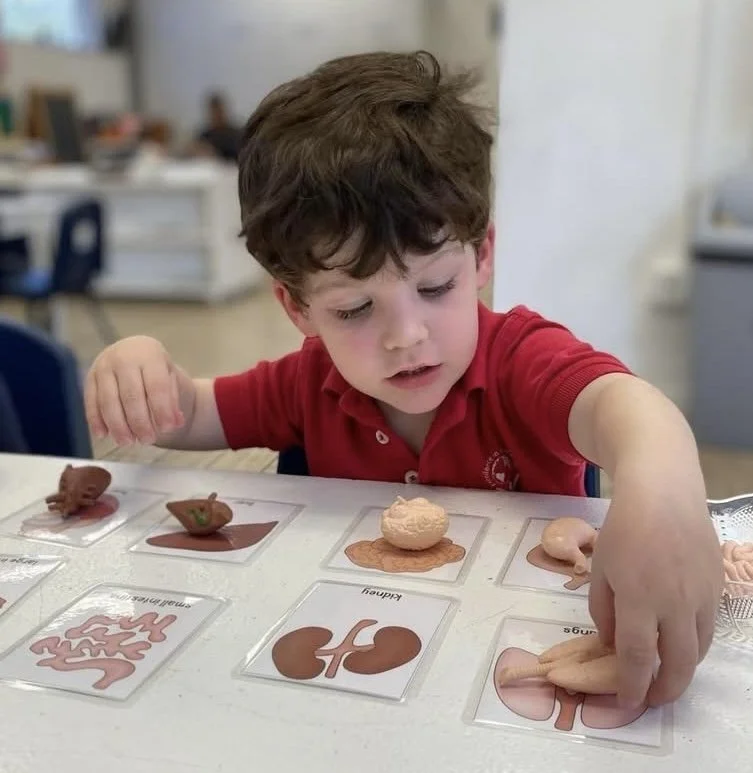
The Montessori method emphasizes that from birth to age six, a child’s mind is uniquely absorbent. During these formative years, children learn more rapidly than at any other time, shaping their intelligence, learning approaches, and basic personality. What is formed in this period is difficult to change later. Therefore, Montessori highlights the importance of providing a strong foundation and a stimulating environment, culminating around age six—“the Year of Fruition”—as one of the most important stages of a child’s education.
Three-Year Cycle
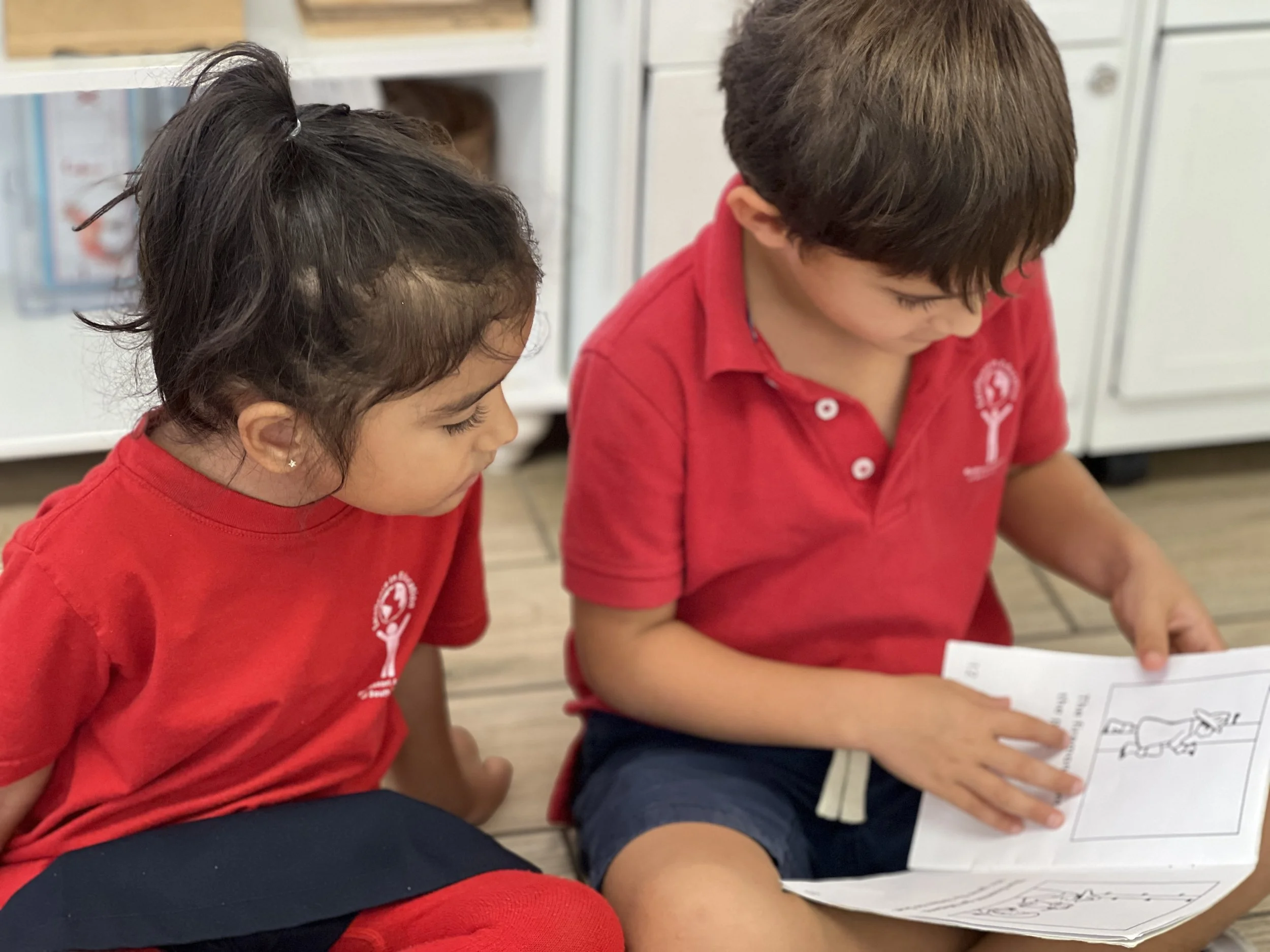
Montessori education is built around three-year developmental cycles, or Planes of Development, identified by Dr. Maria Montessori. Classrooms are intentionally mixed-age, allowing children to learn from one another as younger students observe and older students lead. This structure fosters independence, empathy, confidence, and continuity while supporting each child’s academic, social, and emotional growth at their own pace.
Sensitive Period
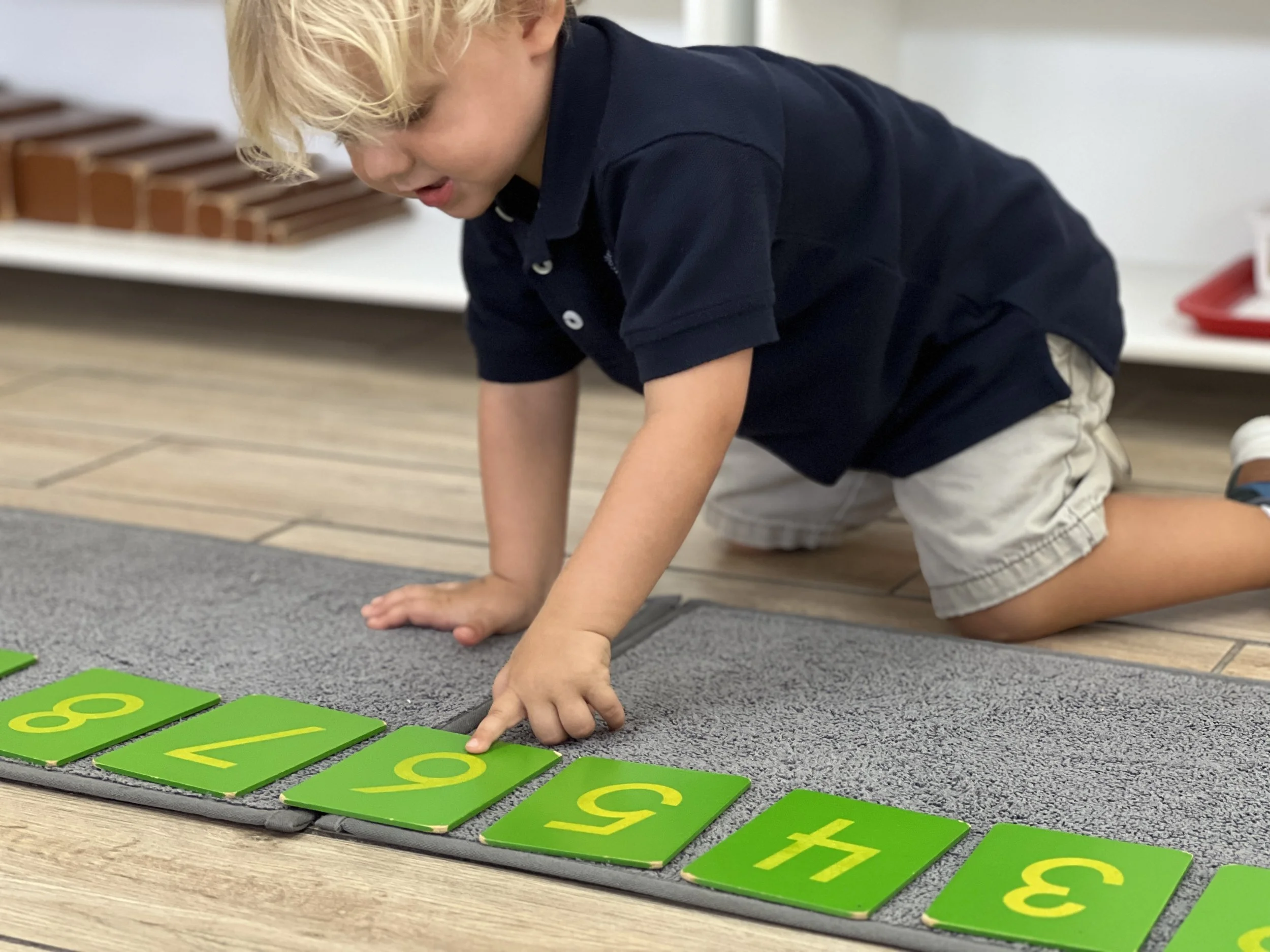
Sensitive Periods are brief windows in a child’s development when they are especially ready to learn specific skills with ease. When these periods are recognized and supported at the right time, learning is joyful and lasting. Montessori education honors these moments to help children progress confidently and successfully.
Prepared Environment
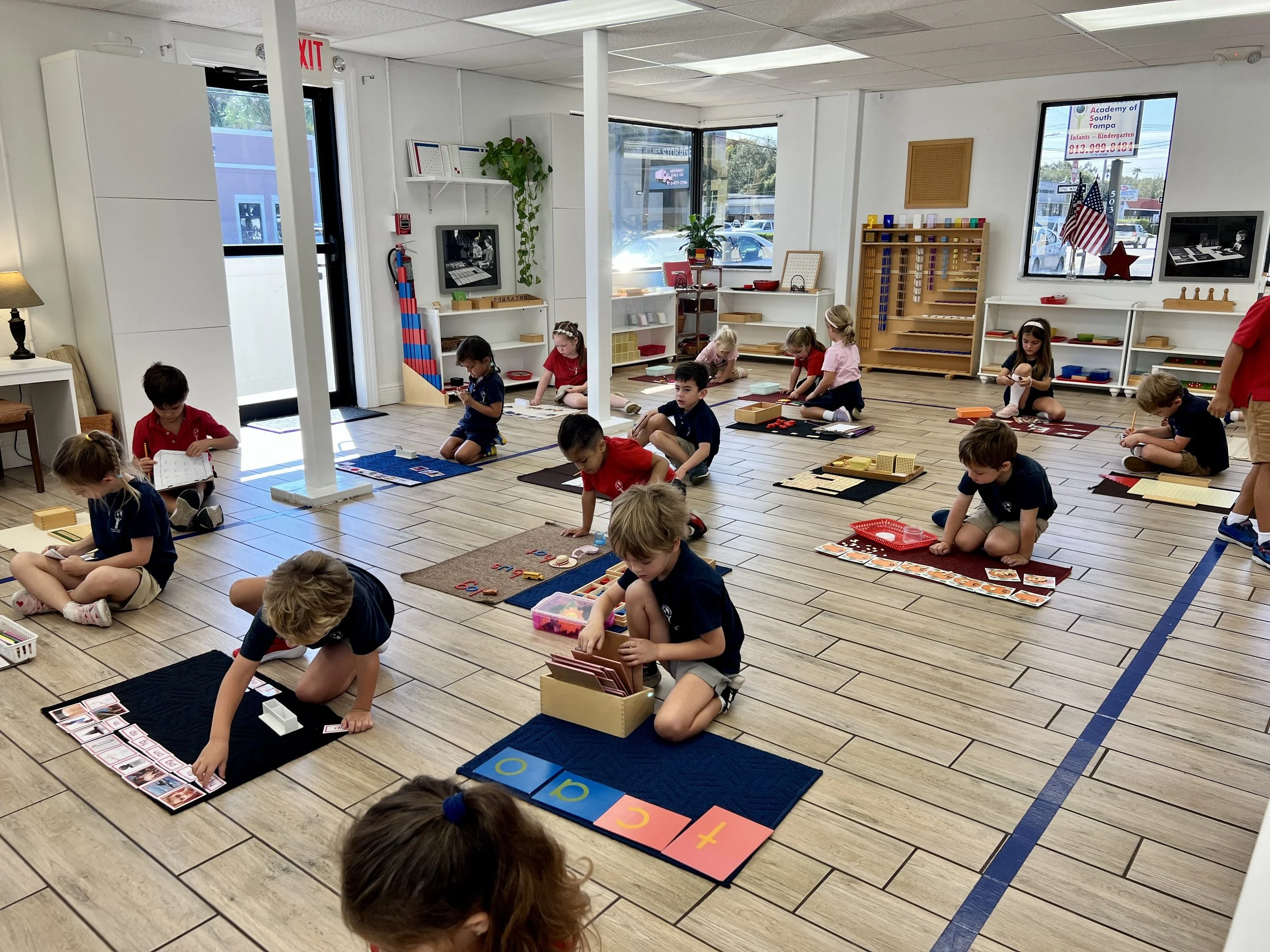
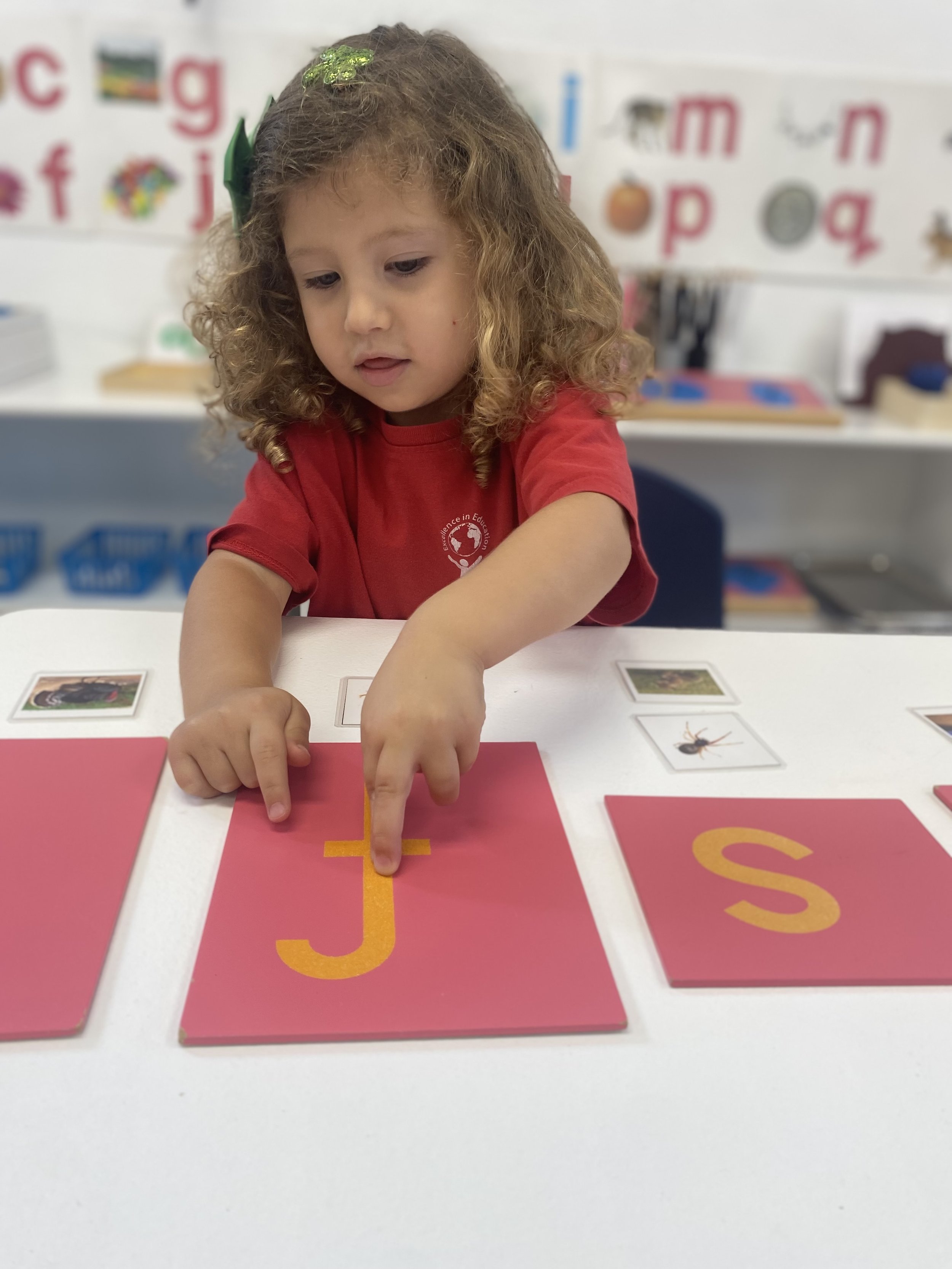
The Montessori Prepared Environment is carefully designed to inspire curiosity and support children’s developmental needs. Beautifully ordered classrooms and self-teaching materials allow children to work independently, at their own pace, in a calm, non-competitive setting. Through meaningful activity and sensorial exploration, children develop focus, independence, and an understanding of how to learn.
Role of the Teacher
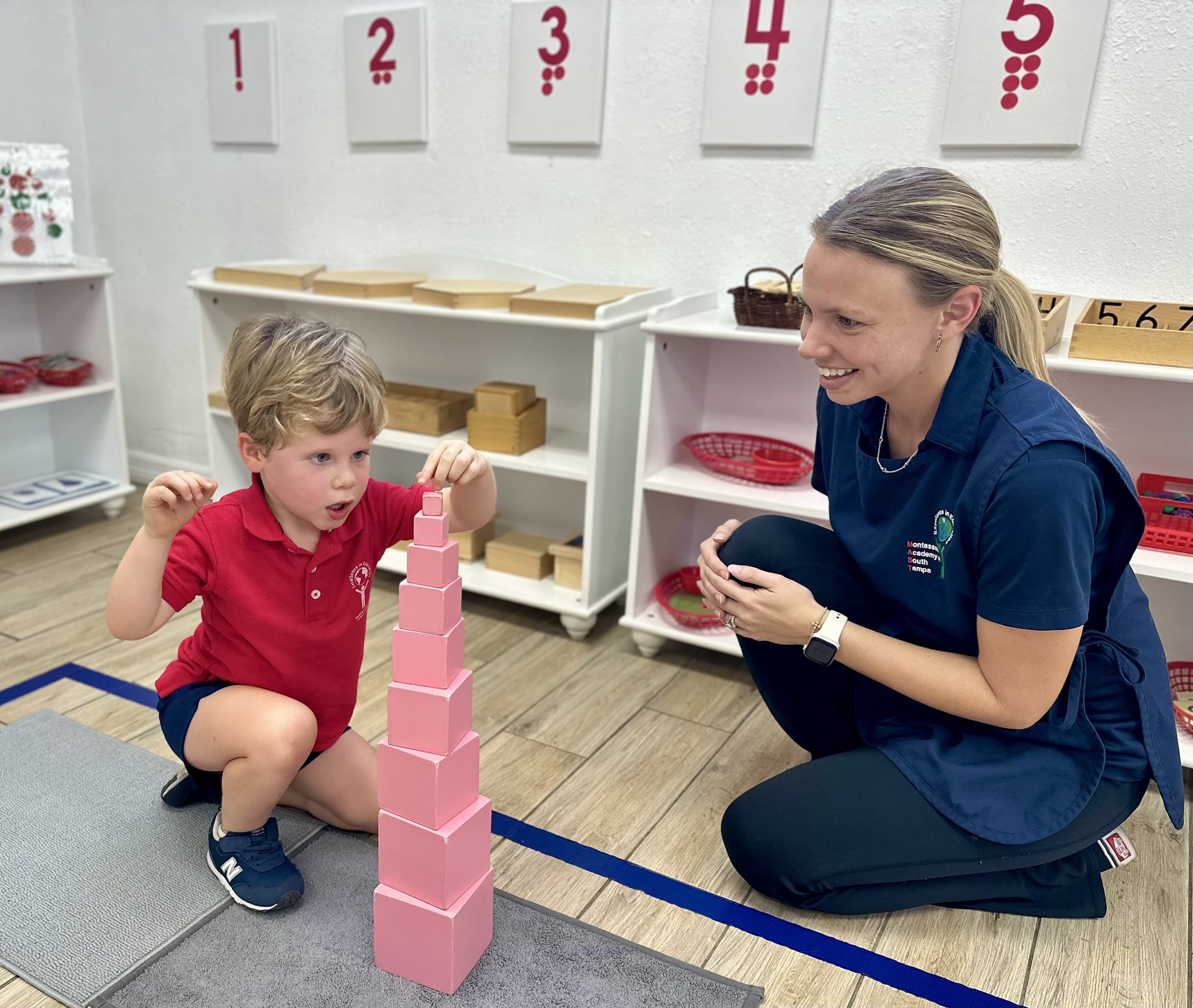
The Montessori teacher is an integral part of the Prepared Environment, serving as a guide who nurtures independence, curiosity, and confidence. Rather than directing learning, the teacher observes, models the use of materials, and supports each child’s individual exploration. By fostering kindness, self-discipline, and critical thinking, the guide helps every child reach their fullest potential. Montessori teachers carefully observe each child’s progress and are trained to recognize individual readiness and Sensitive Periods, ensuring learning is supported at the right time and pace.
The Three-Period Lesson
When a child has demonstrated interest and readiness for a particular concept or material, he or she will receive lessons from the teacher. In Montessori, a teacher uses the Three-Period Lesson to introduce a concept or vocabulary and demonstrate the purpose of a material. These lessons allow for a slower, easier absorption process and allow for isolated concepts and reinforcement of each step or component of a lesson as necessary.
1st Period: Name – “This is a sphere.”
2nd Period: Recognition – “Show me the sphere.”
3rd Period: Recall – “What is this?”